Trezor Suite: The Ultimate Guide to Secure Cryptocurrency Management
In today’s digital world, owning cryptocurrency means taking full responsibility for its security. Unlike traditional banks, where account recovery and password resets are possible, crypto ownership is determined entirely by control of private keys. This is where Trezor Suite comes in—a software platform designed to manage digital assets safely while giving users full control over their funds.
Developed by SatoshiLabs, the creators of the Trezor hardware wallet, Trezor Suite combines a user-friendly interface with industry-leading security features. It allows users to manage, monitor, and transact cryptocurrencies while keeping private keys offline, ensuring that funds remain secure even if a computer or network is compromised.
This guide provides a comprehensive overview of Trezor Suite, covering its functionality, key features, supported cryptocurrencies, security architecture, privacy tools, and best practices for users.
What Is Trezor Suite?
Trezor Suite is the official companion software for Trezor hardware wallets, including the Trezor Model One and Trezor Model T. Unlike custodial wallets or exchange accounts, Trezor Suite is non-custodial, meaning that all private keys are stored exclusively on the hardware wallet. No third party, not even Trezor, has access to your funds.
The software is available as:
A desktop application for Windows, macOS, and Linux
A web-based interface for browser access
Trezor Suite serves as the hub for managing cryptocurrency portfolios, performing transactions, and configuring hardware wallet settings.
How Trezor Suite Works
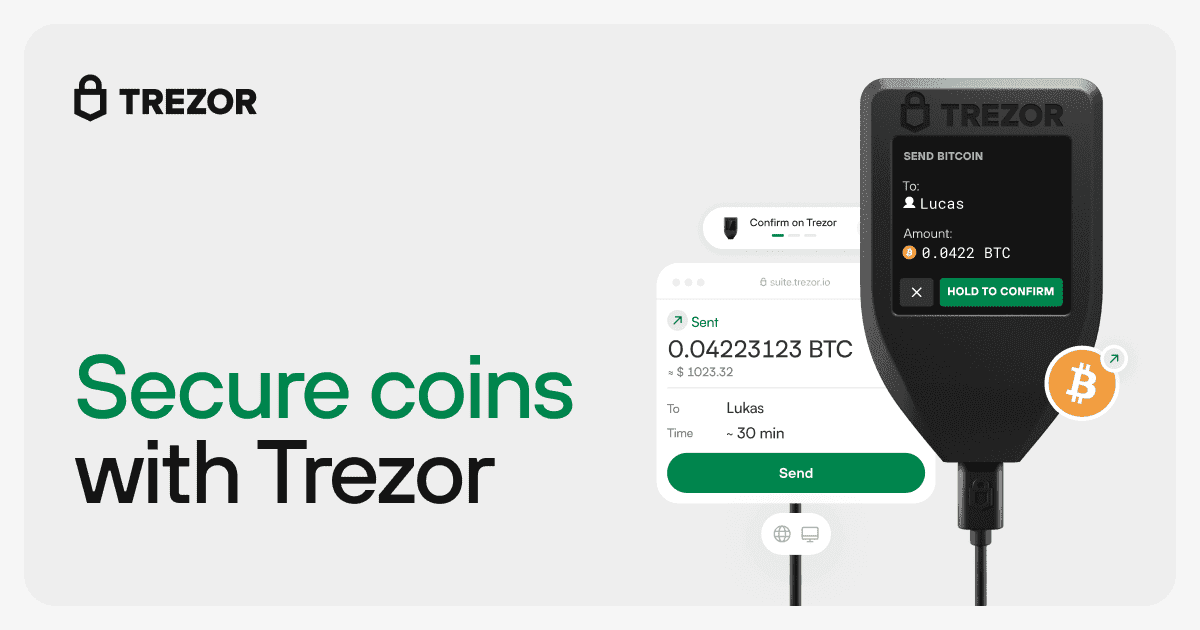
Trezor Suite works in tandem with the Trezor hardware wallet to ensure secure interaction with blockchain networks. All sensitive operations, such as signing transactions or generating private keys, happen on the device itself.
The process works as follows:
A user initiates a transaction in Trezor Suite.
Transaction details are sent to the Trezor device.
The user verifies transaction details on the device screen.
The hardware wallet signs the transaction offline.
The signed transaction is broadcast to the blockchain.
This method ensures that private keys never leave the secure environment of the hardware wallet, providing strong protection against malware and hacking.
Key Features of Trezor Suite
1. Secure Cryptocurrency Management
Trezor Suite allows users to manage multiple cryptocurrencies in a single platform. It supports multiple accounts per asset, enabling users to organize holdings for savings, trading, or long-term storage.
All funds are secured by the hardware wallet, which protects private keys from exposure to the internet.
2. Portfolio Overview and Tracking
The Trezor Suite dashboard provides a clear view of your crypto portfolio. Users can see:
Total portfolio value
Individual asset balances
Price fluctuations
Historical performance charts
This built-in tracking eliminates the need for third-party portfolio apps that could compromise privacy.
3. Sending and Receiving Funds
Trezor Suite simplifies transactions while maintaining security. Users can:
Generate verified receiving addresses
Send crypto with customized fees
Confirm every transaction on the Trezor device
Verification on the device ensures funds cannot be redirected or stolen by malware.
4. Exchange and Swap Integration
Trezor Suite integrates third-party services to allow users to:
Buy crypto using fiat currency
Swap between cryptocurrencies
Sell crypto depending on regional availability
This feature reduces reliance on centralized exchanges and keeps funds under the user’s control.
5. Advanced Bitcoin Tools
Trezor Suite provides powerful features for Bitcoin users:
Coin control to manage UTXOs
Replace-by-Fee (RBF) support
Custom fee selection
Native SegWit support
These tools give users precise control over transactions, making it ideal for experienced traders.
6. Privacy and Security
Privacy is a cornerstone of Trezor Suite. Features include:
Optional Tor routing
Address management and labeling
Minimal data sharing
Secure offline signing
Users can control what information is exposed while interacting with public blockchain networks.
7. Device Management and Firmware Updates
Trezor Suite acts as a central hub for hardware wallet management. Users can:
Update device firmware
Configure security settings
Enable passphrase protection
Backup and verify recovery seeds
All firmware updates are cryptographically verified, ensuring device integrity.
Supported Cryptocurrencies
Trezor Suite supports a wide range of cryptocurrencies, including:
Bitcoin (BTC)
Ethereum (ETH)
Litecoin (LTC)
Bitcoin Cash (BCH)
Cardano (ADA)
Ripple (XRP)
Dogecoin (DOGE)
Stablecoins like USDT and USDC
Thousands of ERC-20 tokens
For unsupported assets, Trezor can connect to third-party wallets while maintaining hardware-level security.
Security Architecture
Trezor Suite is built on multiple layers of security:
Hardware Wallet Protection: Private keys never leave the device. All signing happens offline.
Open-Source Transparency: Trezor Suite and firmware are open-source, allowing public audits and community verification.
PIN and Passphrase Protection: Devices are secured by a PIN and optional passphrase.
Recovery Seed: A 12- or 24-word recovery seed allows users to restore funds if the device is lost or damaged.
Trezor Suite vs Custodial Wallets
FeatureTrezor SuiteCustodial WalletsKey OwnershipUserPlatformOffline StorageYesNoPrivacyHighLowAccount FreezingImpossiblePossibleSecurity ModelHardware-basedServer-based
Trezor Suite empowers users with full control, privacy, and ownership—advantages often absent in custodial platforms.
Beginner-Friendly Interface
Despite advanced security, Trezor Suite is designed to be approachable:
Step-by-step device setup
Recovery seed guidance
Easy account creation