Trezor Suite Explained: A Secure and Private Gateway to Cryptocurrency Management
As cryptocurrencies mature from a niche technology into a global financial movement, the importance of secure self-custody has never been greater. High-profile exchange failures, increasing surveillance, and sophisticated cyberattacks have highlighted a simple truth: true ownership of crypto requires control of private keys. This is where Trezor Suite plays a vital role.
Trezor Suite is the official software interface developed by SatoshiLabs for Trezor hardware wallets. It allows users to manage, protect, and grow their digital assets while maintaining full sovereignty over their funds. Built with security, transparency, and privacy at its core, Trezor Suite offers a robust environment for both beginners and advanced crypto users.
This article provides a comprehensive look at Trezor Suite—how it works, its core features, security model, privacy tools, supported assets, advantages, limitations, and why it remains one of the most trusted platforms in the self-custody ecosystem.
What Is Trezor Suite?
Trezor Suite is a desktop and web-based application designed to work exclusively with Trezor hardware wallets, including the Trezor Model One and Trezor Model T. Rather than storing funds itself, Trezor Suite acts as a secure interface that allows users to interact with blockchain networks through their hardware wallet.
The defining principle behind Trezor Suite is non-custodial ownership. This means:
Private keys are generated and stored on the Trezor device
Keys never leave the hardware wallet
Trezor and third parties cannot access user funds
All transactions require physical confirmation
Trezor Suite is available as:
A downloadable desktop app (Windows, macOS, Linux)
A browser-based version for convenience and accessibility
How Trezor Suite Works
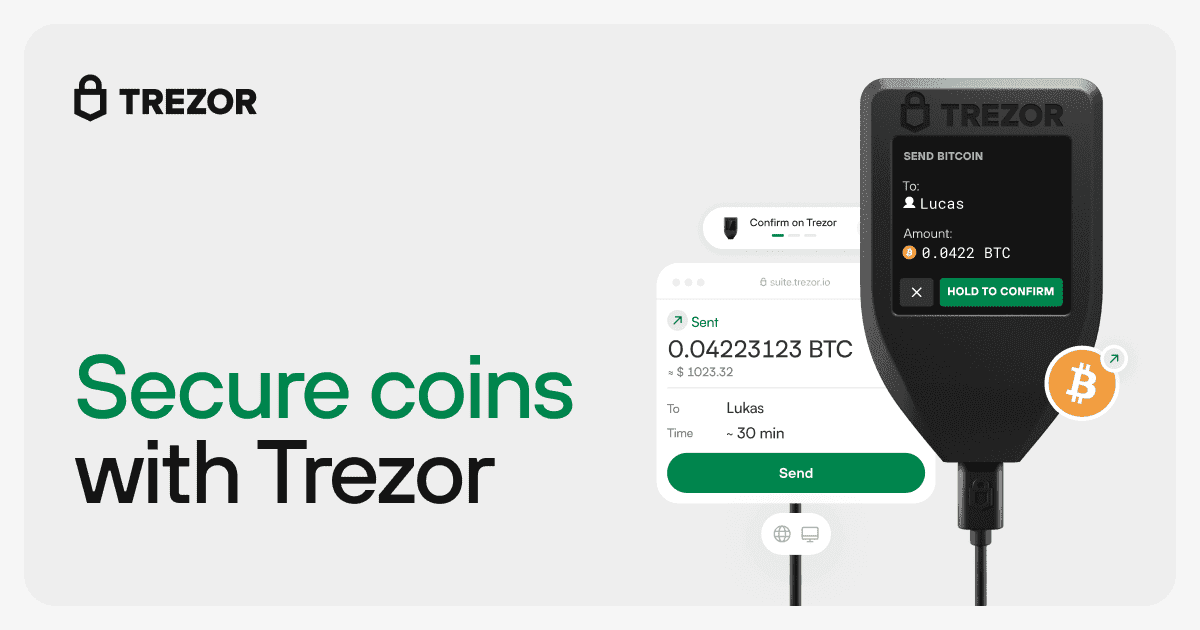
Trezor Suite operates as a bridge between the user and the blockchain. The Trezor hardware wallet handles all sensitive cryptographic operations, while Trezor Suite provides visibility, control, and usability.
When a user performs an action in Trezor Suite:
Transaction details are created within the app
The details are sent to the Trezor device
The user verifies the information on the device screen
The transaction is signed securely on the hardware wallet
The signed transaction is broadcast to the blockchain
This workflow ensures that even if the computer or browser is compromised, funds cannot be moved without physical approval.
Core Features of Trezor Suite
Secure Wallet Management
Trezor Suite allows users to manage multiple cryptocurrencies and multiple accounts under each asset. Funds remain protected by hardware-level security regardless of the system used to access the app.
This structure is ideal for users who want to separate holdings for different purposes such as savings, trading, or long-term storage.
Clear Portfolio Overview
The dashboard in Trezor Suite provides a consolidated view of a user’s crypto holdings, including:
Total portfolio value
Asset allocation
Individual balances
Market price changes
Historical trends
By offering built-in tracking, Trezor Suite removes the need for third-party portfolio apps that may compromise privacy.
Sending and Receiving Cryptocurrency
Sending and receiving crypto through Trezor Suite is designed to be both simple and secure. Users can generate verified receiving addresses and send funds with full transaction transparency.
Each transaction must be:
Reviewed on the Trezor device
Confirmed manually
Signed securely offline
This protects against address manipulation and malware attacks.
Integrated Exchange and Purchase Options
Trezor Suite includes integrated third-party services that allow users to:
Buy cryptocurrency using fiat currencies
Swap between supported crypto assets
Sell crypto (availability depends on region)
These services allow users to perform transactions without transferring funds to centralized exchanges, reducing custodial risk.
Strong Privacy Controls
Privacy is one of Trezor Suite’s standout features. Unlike many wallet platforms, Trezor Suite is built to minimize data leakage.
Key privacy tools include:
Optional Tor network routing
Reduced data sharing by default
Manual control over address usage
Account labeling stored locally
These features help users protect their financial privacy while interacting with public blockchains.
Advanced Bitcoin Capabilities
Trezor Suite offers advanced tools tailored for Bitcoin users, including:
Coin control for managing UTXOs
Replace-by-Fee (RBF)
Custom fee selection
Native SegWit support
These features give users fine-grained control over Bitcoin transactions, making Trezor Suite popular among power users.
Device and Firmware Management
Trezor Suite serves as the central hub for managing the hardware wallet itself. Users can:
Update firmware securely
Configure device settings
Enable passphrases
Perform backups and recovery checks
Firmware updates are cryptographically verified to ensure authenticity.
Supported Cryptocurrencies and Tokens
Trezor Suite supports a broad range of cryptocurrencies and tokens across multiple networks, including:
Bitcoin (BTC)
Ethereum (ETH)
Litecoin (LTC)
Bitcoin Cash (BCH)
Cardano (ADA)
Ripple (XRP)
Dogecoin (DOGE)
Stablecoins such as USDT and USDC
Thousands of ERC-20 tokens
For assets not natively supported, users can connect their Trezor device to compatible third-party wallets while maintaining hardware security.
Security Model of Trezor Suite
Security is foundational to Trezor Suite’s design philosophy.
Hardware-Based Key Storage
Private keys are generated and stored on the Trezor device, never on the computer or browser.
Open-Source Development
Trezor Suite and firmware are open source, allowing independent audits and community verification.
PIN and Passphrase Protection
Access to the device is protected by a PIN code. An optional passphrase adds an additional security layer, creating hidden wallets.
Recovery Seed Protection
Users can recover funds using a 12- or 24-word recovery seed if the device is lost or damaged.
Trezor Suite vs Custodial Wallets
FeatureTrezor SuiteCustodial WalletsKey OwnershipUser-controlledPlatform-controlledOffline StorageYesNoPrivacyHighLowAccount FreezingImpossiblePossibleSecurity ModelHardware-basedServer-based
Trezor Suite reinforces the principle that users—not platforms—should control their funds.
Ease of Use for New Users
Despite its advanced security, Trezor Suite is approachable for beginners. The onboarding process includes:
Guided device setup
Recovery seed creation
Clear security warnings
Step-by-step account creation
The interface is clean and intuitive, helping new users gain confidence without sacrificing safety.
Advanced Use Cases
Experienced users can take advantage of Trezor Suite for:
Long-term cold storage strategies
Privacy-focused Bitcoin management
Multi-account organization
Secure DeFi interaction via third-party wallets
Portfolio diversification with enhanced control
Trezor Suite scales with the user’s knowledge and needs.
Best Practices for Using Trezor Suite
To maintain maximum security:
Never share or digitize your recovery seed
Store backups in multiple secure locations
Verify addresses on the device screen
Only download Trezor Suite from official sources
Keep firmware and software updated
Self-custody is powerful, but it requires responsibility.
Strengths of Trezor Suite
Full self-custody and ownership
Open-source transparency
Strong privacy features
Reliable hardware security
Broad asset support
Trusted brand with long history
Limitations to Consider
Requires purchasing a Trezor hardware wallet
No standalone mobile app
Some features depend on third-party providers
Advanced tools may overwhelm casual users
Despite these limitations, Trezor Suite remains one of the most respected self-custody platforms available.
The Future of Trezor Suite
SatoshiLabs continues to enhance Trezor Suite with:
Expanded blockchain compatibility
Improved performance and UI
Enhanced privacy options
Better integration with emerging ecosystems
Continued security research and improvements
As self-custody becomes essential rather than optional, Trezor Suite is positioned to remain a cornerstone of secure crypto management.
Final Thoughts
Trezor Suite is more than just wallet software—it is a secure, privacy-first environment for managing digital assets. By combining hardware-backed security, open-source transparency, and powerful user tools, it empowers individuals to take full control of their cryptocurrency holdings.